


In a production environment where operators, forklifts, logistics flows, and high-risk zones share the same space, accident prevention relies on immediate visual clarity. As a fundamental pillar of visual management and the 5S methodology, industrial signage structures workspaces, streamlines traffic, and prevents collisions or incidents caused by clutter. Combined with rigorous floor marking, it turns the shop floor into a readable environment where safety becomes an everyday collective reflex.
Why Is Industrial Signage a Major Driver of Safety?
In both manufacturing plants and logistics warehouses, the lack of clear boundaries leads to hazardous situations: pallets encroaching on pedestrian walkways, obstructed emergency equipment, or poorly identified restricted-access zones.
Effective industrial signage addresses three core operational challenges:
- Separating and securing traffic flows: Visually distinguishing material-handling lanes from pedestrian walkways drastically reduces the risk of collisions and severe workplace accidents.
- Guaranteeing access to emergency equipment: Areas located in front of fire extinguishers, electrical panels, safety showers, or emergency exits must remain completely clear at all times.
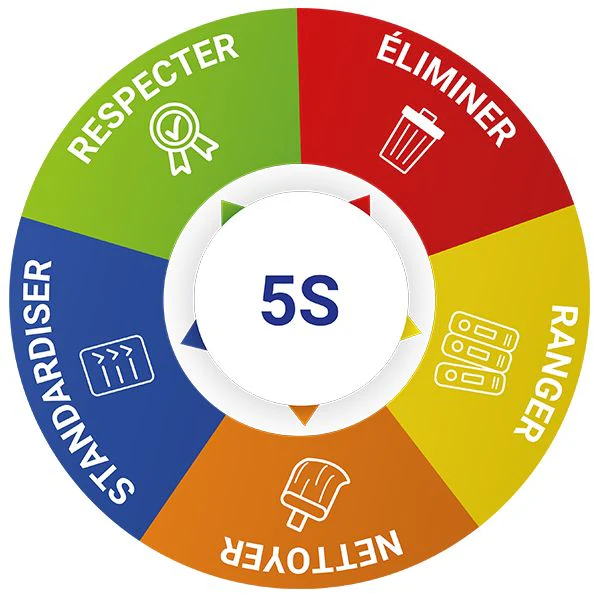
- Anchoring 5S and Lean standards: Assigning dedicated footprints for pallets, bins, or mobile carts eliminates wasted search time and prevents clutter-related slips, trips, and falls.
To equip your facilities sustainably and meet HSE regulatory requirements, explore our complete range of solutions dedicated to marking, signage, and safety.
Floor Marking: Standardized Color Codes and Essential Equipment
Floor marking provides the very first visual cue perceived when moving across a shop floor. To be understood instantaneously by all employees and visitors, it relies on a standardized color code:
- White: General traffic lanes and boundaries for standard storage zones.
- Yellow / Black: Hazard warnings, caution areas, fixed obstacles, or loading docks.
- Red / White: Prohibition, restricted access, and "keep clear" zones in front of fire-fighting equipment.
- Green: Directional guidance, evacuation routes, and first-aid stations.
- Blue: Mandatory instructions and Personal Protective Equipment (PPE) requirements.
- Orange: Storage areas for chemicals or hazardous materials.
Unlike industrial paint—which forces production lines to shut down during drying times—heavy-duty adhesive solutions offer immediate installation and high flexibility whenever cell layouts change. Depending on your floor surface (smooth, porous, or oily) and traffic intensity, our floor marking range lets you match the exact durability level required (Standard, Heavy-Duty, or Extra):
- Adhesive marking tapes: Ideal for laying down continuous lines, defining walkways, or creating safety zebra striping around machinery.
- Adhesive floor shapes (corners, T-shapes, dots): Allow you to mark the exact footprint of a pallet, trolley, or recycling bin without framing the entire perimeter, minimizing wear from rolling wheels.
- Adhesive floor pictograms and crosswalks: Explicit visual markers—such as adhesive floor pictograms ("Do Not Block", footprints, directional arrows, pedestrian crossings)—naturally guide foot traffic and reinforce critical safety rules.
Complementing Floor Marking with Overhead Signage and Physical Protection
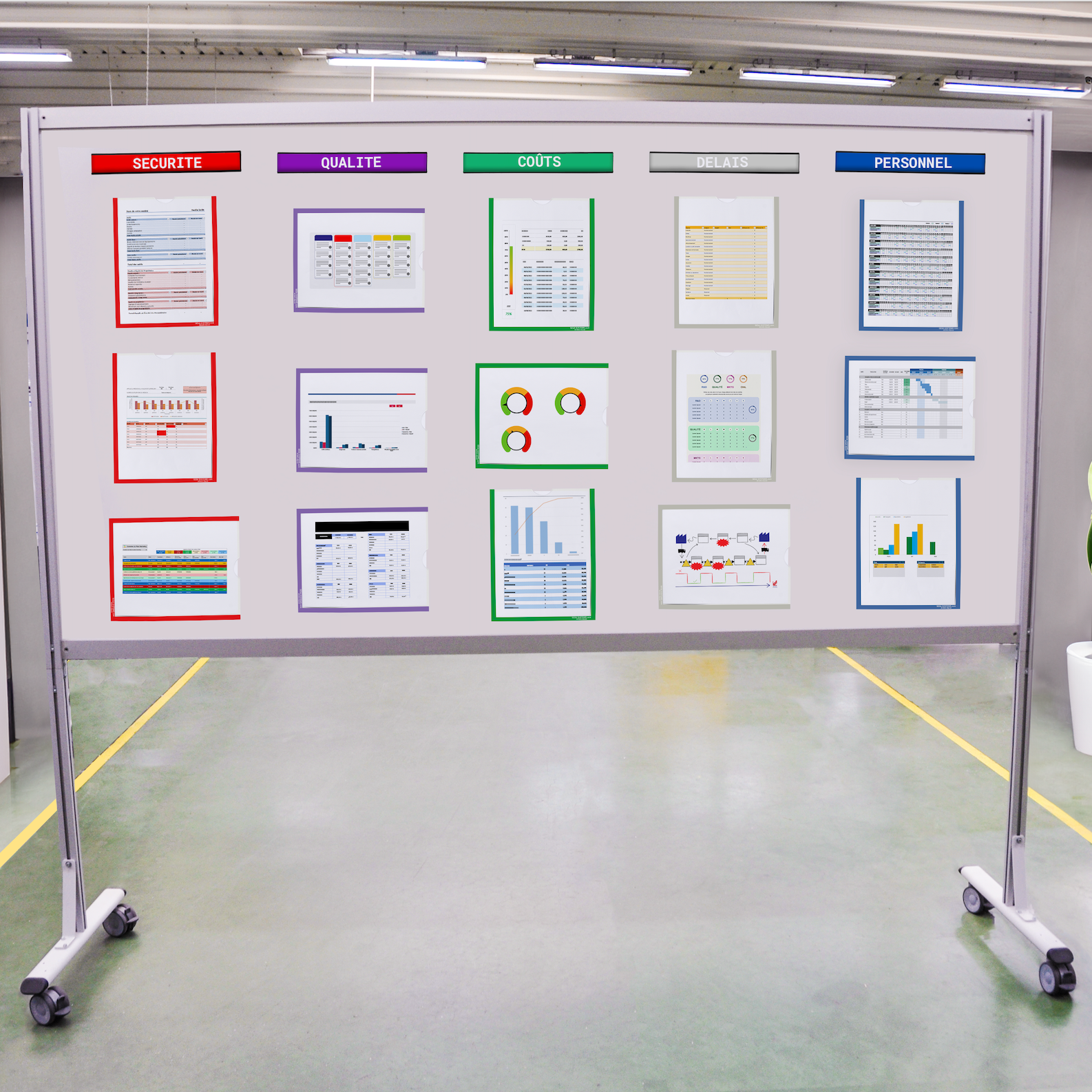
For optimal safety, floor-level cues should be paired with eye-level and overhead signage. Above storage aisles or production cells, multi-sided suspended banners and illuminated signs allow teams to identify each department from a distance.
At the same time, physical protection for both infrastructure and operators reinforces prevention: retractable belt stanchions to temporarily cordon off maintenance zones, rack upright protectors to absorb forklift impacts, and yellow-and-black foam corner guards on sharp edges or steel beams.
By combining structured floor marking, cohesive industrial signage, and tailored protective equipment, you establish an organized workspace that sustains your Lean methods and best practices while ensuring the lasting safety of your teams.


