


Facing growing challenges in competitiveness, productivity, and sustainability, industrial performance is more than ever a strategic priority in 2026. Between rising costs, pressure on lead times, shortages of skilled labor, and digital transformation, manufacturers must rethink their operating models to gain agility and efficiency.
But how can the right levers for action be identified? What concrete pillars should be implemented to sustainably improve shop-floor performance and the entire value chain? Here are the 7 essential levers to boost your industrial performance in 2026, with a focus on measurable benefits and high value-added solutions. Those levers relies on the principle of Lean Management, a series of methods aiming process optimization to boost overall performance. The benefits of Lean Management also creates value for the customer by improving the quality of the product or service provided by the company.
1. The Lean approach: the foundation of operational excellence
Lean Manufacturing, a sub division of Lean Management created by the Toyota Production System (TPS), remains the essential foundation for optimizing flows, reducing waste (muda), improving efficiency and establishing a culture of continuous improvement.
Key benefits :
- Reduced cycle times
- Improved quality
- Employee engagement
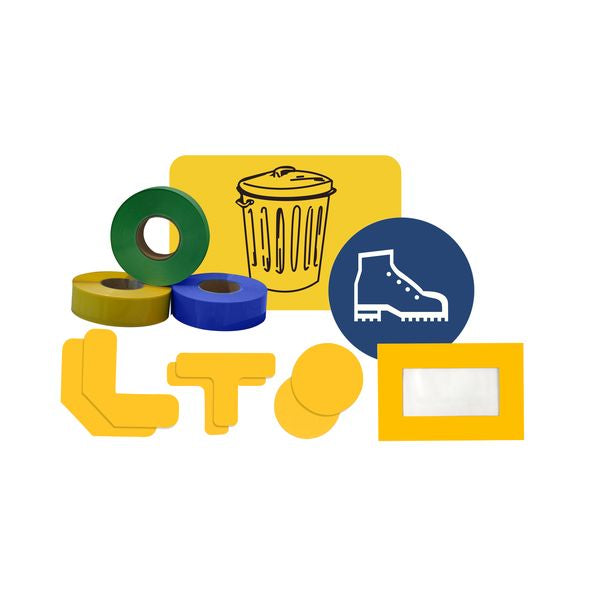
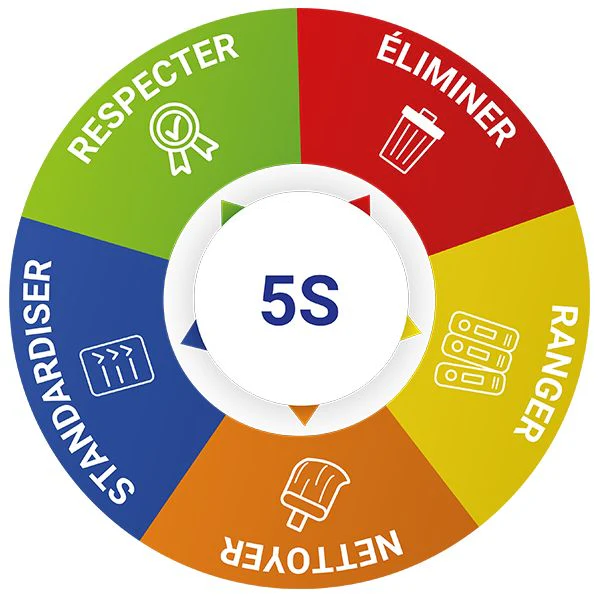
Practical solutions: implement Lean through Kaizen workshops for project management, 5S, pull system, visual management, Value Stream Mapping (VSM). Ergonomic and modular workstations also facilitate standardization and flexibility for long term performance.
2. Digitalization of industrial processes
Digitalization means turning data into a real-time management lever. Thanks to MES, ERP, and IoT solutions, companies can monitor production, track deviations, anticipate issues, and improve responsiveness.
Concrete example : a factory equipped with a connected MES system reduced downtime by 20% through better disruption management.
To implement : connected tablets, management dashboards, IoT sensors, digital visual management solutions.
3. Intelligent and flexible automation
Automation is no longer an option: cobots, AGVs, and automated conveyor systems help secure quality, reduce non-value-added tasks, and address labor shortages.
2026 focus : flexible automation capable of quickly adapting to product variability.
Measured impact : +30% productivity in workshops integrating collaborative robotics solutions.
4. Standardization of workstations and operations
Variability is the enemy of performance. Standardizing workstations, tools, and methods ensures consistent results, facilitates training, and improves quality.
Example : standardizing assembly workstations in an automotive plant reduced errors by 40%.
Concrete solutions : ergonomic industrial furniture, standardized work instructions, visual operating procedures.
5. Performance culture and team involvement
No transformation is sustainable without human commitment. Developing a performance culture means giving meaning, empowering teams, and recognizing achievements.
Key lever : hands-on management based on shop-floor rituals (QRQC, top 5, short-interval management).
Expected result : a 15 to 20% increase in productivity driven by operator engagement and proactive problem-solving.
6. Production data analysis (Data & AI)
Data is a gold mine—provided it is properly leveraged. Through predictive analytics and artificial intelligence, manufacturers can anticipate deviations, optimize settings, and improve quality.
Concrete applications : predictive maintenance, automated quality control, production planning optimization.
Key figures : up to a 25% reduction in scrap for companies that have implemented a Data strategy.
7. Global alignment through visual management
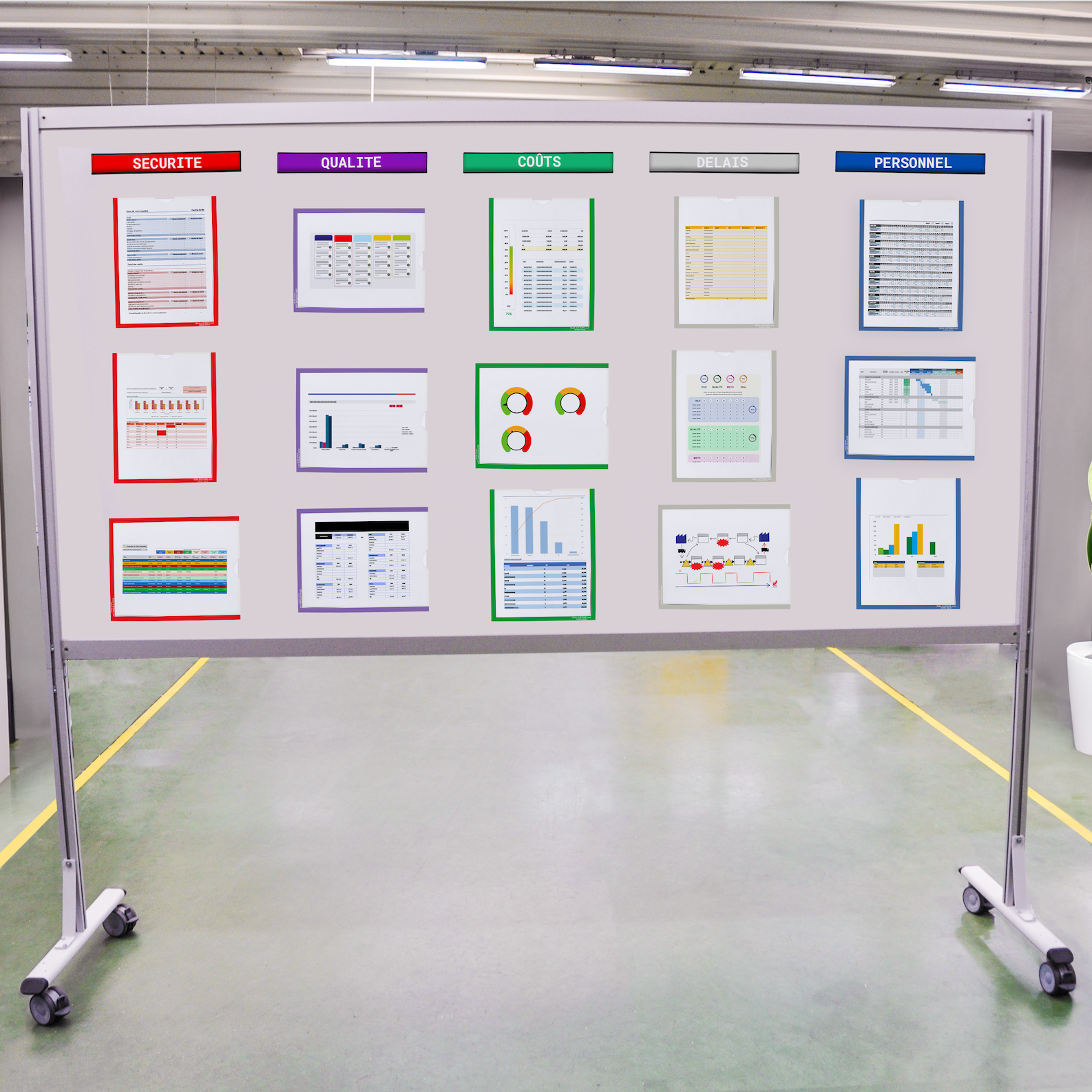
Effective management relies on a shared vision. Visual management makes objectives, gaps, and ongoing actions visible, fostering transparency at all levels.
Examples : performance boards, digital KPI displays, visual management areas on the shop floor.
Benefits : team alignment, increased responsiveness, and facilitated continuous improvement.
In summary
In 2026, industrial performance is not decreed—it is built around coherent, complementary levers rooted in reality: Lean, digitalization, automation, standardization, team culture, data, and visual management. To succeed, it is essential to combine technological tools with human dynamics toward a single goal: producing better, faster, and with greater value.
Ready to take action? Discover our concrete solutions in Lean, industrial furniture, digitalization, and shop-floor performance, designed to meet the challenges of tomorrow’s industry.


