


In Lean Manufacturing, choosing to implement continuous improvement on the shop floor requires rigorous and responsive operational communication. Too often, when you organize meetings or a traditional status meeting inside a closed conference room without a strict agenda, discussions drag on into unproductive side conversations and become a genuine waste of time.
Moving away from inefficient habits by holding a meeting that is brief, focused, and operational—such as Short Interval Management (SIM) routines—is the ideal way to engage all team members. Among these rituals, the top 5 meeting and the top 15 meeting structure daily operations to keep meetings short and build an efficient team focused on shared results.
Top 5 and Top 15 Meetings: Defining the Purpose of Each Stand-Up Routine
Both rituals share a fundamental principle: they take place standing up on the Gemba (the shop floor) around visual boards, driven by a clear objective for each session:
- The Top 5 Meeting (Shift-Start Huddle): Strictly limited to 5 minutes at the start of a shift, this brief team meeting allows the supervisor or project manager to review safety guidelines, share an immediate status update, and assign work stations. The leader sets a precise target for the upcoming shift, ensuring everyone begins work aligned on operational priorities.
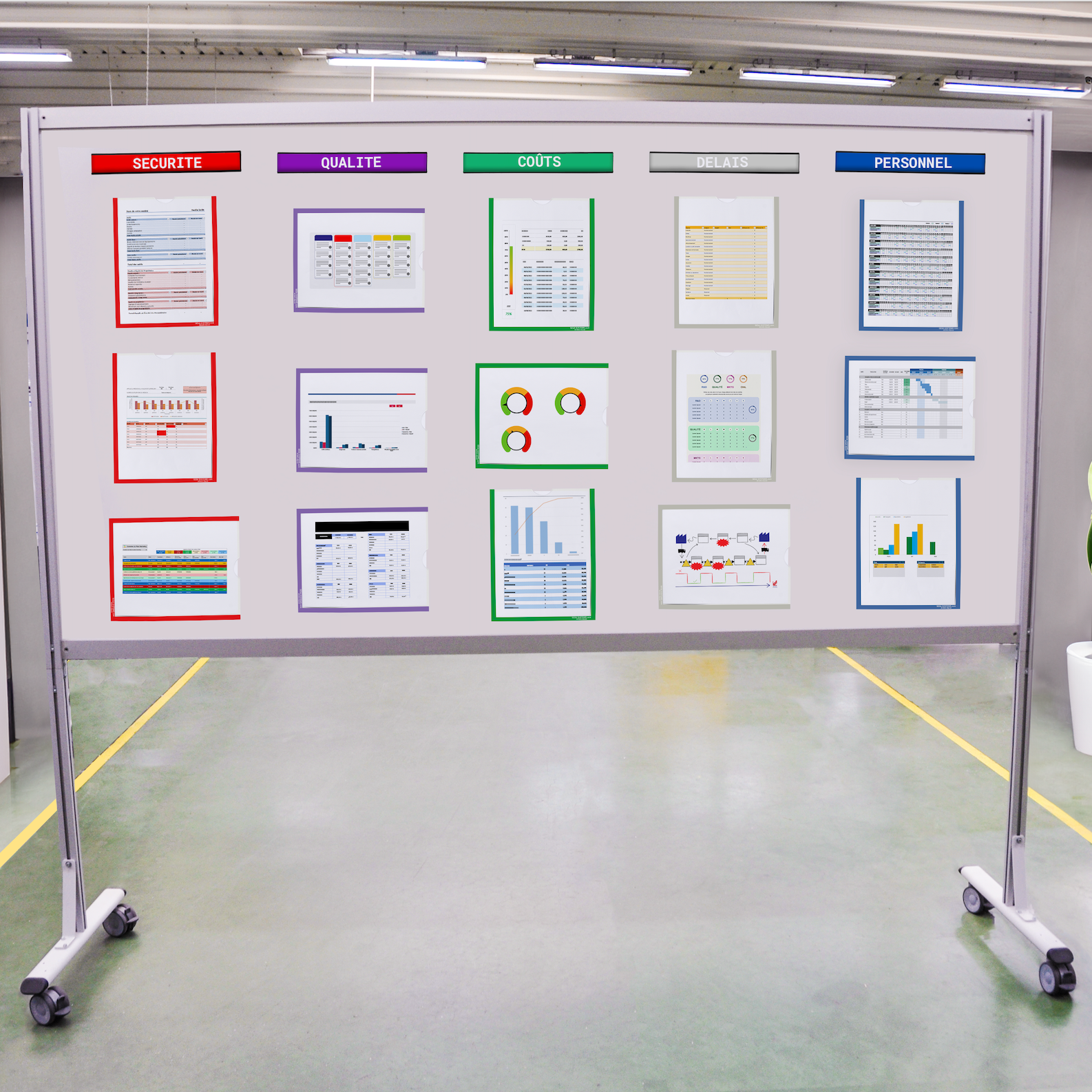
- The Top 15 Meeting (Performance Review and Problem Solving): Scheduled mid-shift or at shift handover, this type of meeting lasts exactly 15 minutes to analyze operational KPIs (Safety, Quality, Cost, Delivery, People). Similar to a daily scrum or agile daily meeting, participants review performance gaps, foster collaborative problem solving, validate decisions made, and outline the next steps to identify issues before they escalate into production bottlenecks.
To ensure the successful implementation of these industrial standards across your facilities, explore our guide on Lean methods and best practices.
Structuring the Meeting Flow to Maximize Efficiency
To experience the full benefits of stand up meetings and ensure you save time each day, the meeting flow should follow a standardized pattern:
- Conduct a rapid check-in: Facilitating quick, face to face peer exchanges strengthens collaboration and team building, giving operators an immediate voice.
- Review key metrics visually: Bottlenecks and quality anomalies are flagged instantly using standardized visual cues (green/red indicators).
- Formalize an immediate action plan: When an issue arises, the team does not delay; each problem is translated into specific action items with an assigned owner and deadline.
- Facilitate rapid decision-making: Transparent operational data accelerates collective decision-making regarding immediate shop floor hurdles.
- Prepare upcoming meetings: The visual board acts as a dynamic task manager and an instant meeting summary, displaying clear priorities line-side ahead of upcoming meetings without requiring manual minutes.
From Physical Whiteboards to Interactive Screens: Digitalizing Your Huddles
The effectiveness of these daily rituals depends on the readability and accuracy of the displayed metrics. While magnetic whiteboards remain a proven starting point, transitioning to connected shop floor displays enhances the performance of your daily reviews:
- Dynamic visual management: Connecting interactive displays directly to your manufacturing software (MES, ERP) updates shop floor data in real time. Whether coordinating operators on-site or aligning with a hybrid or distributed team, decision-makers can rely on live production figures without manual data entry.
To modernize your shop floor communication and equip your production cells with industrial collaborative solutions, explore our range of digital visual management and interactive screens.
When managed with discipline, these team stand-up meetings eliminate operational downtime, reinforce teamwork, and sustain a culture of operational excellence directly on the shop floor.


